

How to Dial In Your Grind: Finer vs. Coarser, Explained by the Flock
Your coffee tastes sour, bitter, watery, or oddly like a damp cardboard box? Before blaming the beans, the kettle, or your questionable playlist, check your grind size.
Grind size is one of the simplest ways to change how water moves through coffee and how much flavor it pulls from the grounds. Adjust it thoughtfully, and your morning brew can become sweeter, clearer, and more balanced. Adjust everything at once, and you’ll create the coffee equivalent of a group project with no instructions.
Maple and Bro Joe are here to make the process less mysterious. Morton has also prepared a chart, three backup charts, and a spreadsheet nobody asked for. We appreciate his commitment.

The Brew Blueprint: What Grind Size Actually Changes
When you grind coffee finer, you create smaller particles with more surface area exposed to water. Water can reach more of the coffee more quickly, which generally increases extraction.
When you grind coffee coarser, you create larger particles. Water moves through more easily and extracts less from each particle during the same amount of time.
Here’s the simple version:
| If you… | Water usually… | Coffee usually extracts… |
|---|---|---|
| Grind finer | Moves more slowly | More |
| Grind coarser | Moves more quickly | Less |
That does not mean “finer is better” or “coarser is better.” It means each brewing method needs a useful starting point, and your taste tells you where to go next.
Gerald remembers: “I’ve tasted thousands of bad cups so you don’t have to. You’re welcome.”
First, Learn to Read the Cup
Before changing your grinder, taste the coffee carefully. Let it cool for a minute or two; very hot coffee can hide sweetness and make bitterness harder to identify.
Go finer when your coffee tastes:
- Sour or sharply acidic
- Thin, weak, or watery
- Hollow or underdeveloped
- Papery
- Finished unusually quickly
These are common signs that the water did not extract enough flavor from the coffee. Move your grinder slightly finer, then brew again while keeping everything else the same.
Go coarser when your coffee tastes:
- Bitter or harsh
- Dry or astringent
- Ashy
- Heavy or muddy
- Gritty, especially in a French press
- Slow to brew or prone to clogging
These signs often point to over-extraction or excessive resistance. Move slightly coarser and try again.
The word “slightly” matters. Do not fling the grinder from one extreme to the other like Bro Joe tossing a dumbbell. Make a small adjustment so you can understand what changed.
Maple’s Rule: Change One Thing at a Time
Maple recommends treating each brew like a calm experiment:
- Keep your coffee dose the same.
- Keep your water amount the same.
- Keep your water temperature the same.
- Keep your pouring or stirring technique consistent.
- Change only the grind size.
- Taste the next cup and compare.
For most burr grinders, adjust by one to three clicks or a very small turn of the dial. Grinder settings are not universal, so “medium” on one grinder may look like “medium with ambitions” on another.
If your grinder retains old grounds, discard or purge a small amount after making a significant adjustment. Otherwise, yesterday’s grind can sneak into today’s experiment wearing a tiny disguise.
Morton insists: “Record the dose, water, grind setting, brew time, and result.”
Maple says, “Or just remember whether it tasted good.”
Morton has prepared a form for both approaches.
Dialing In by Brewing Method
Different brewing methods expose coffee to water for different lengths of time. Use the following ranges as starting points, then let flavor make the final decision.
Espresso: Start Fine
Espresso uses pressure and a short brew time, so it generally requires a fine grind.
A common starting point for a double shot is:
- 18 grams of coffee
- 36 grams of espresso
- Approximately 25–30 seconds of extraction
If the shot runs very quickly and tastes sour or weak, grind finer. The smaller particles create more resistance and give the water more time to extract flavor.
If the shot barely drips, runs longer than roughly 32–35 seconds, or tastes bitter and dry, grind coarser.
For espresso, adjust carefully. A tiny change can have a dramatic effect, which is why Bro Joe approaches the grinder with the seriousness of a goose defusing a pastry-related emergency.
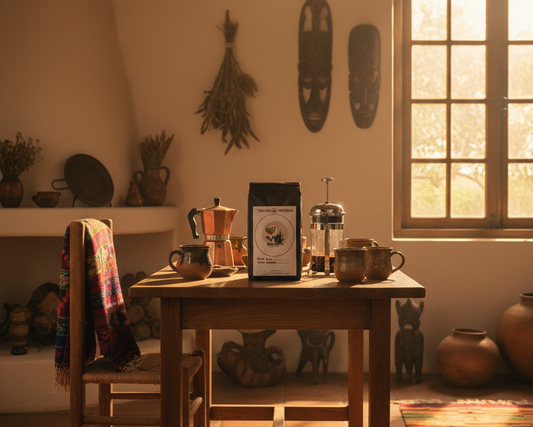
Looking for a coffee suited to espresso? Explore the Blonde Blend Best for Espresso or browse the espresso roast collection.
Pour-Over and Drip: Start Medium
Pour-over brewers such as a V60 or Kalita typically work well with a medium-fine to medium grind. A Chemex often prefers something slightly coarser because of its thicker filter.
A typical brew may take approximately 2–4 minutes, depending on the brewer, dose, filter, and recipe.
- Fast drawdown plus sour or weak flavor: grind finer.
- Slow drawdown plus bitter or dry flavor: grind coarser.
- Uneven flow or clogging: check your grind and pouring technique.
If the coffee bed looks dusty and compact after brewing, your grind may be too fine. If it contains many visibly large particles, it may be too coarse: or your grinder may be producing an uneven mix.
French Press: Start Coarse
French press coffee usually benefits from a coarse grind and a longer steep. Begin around 4–6 minutes, then adjust according to taste.
- Gritty, muddy, or overly bitter: grind coarser.
- Sour, watery, or underdeveloped: grind finer or steep a little longer.
A coarse grind helps reduce the amount of fine sediment that slips through the mesh filter. Some sediment is part of the French press experience. An entire beach is not.
AeroPress: Adjust Around the Recipe
AeroPress recipes vary considerably, but many use a fine to medium-fine grind because the brew time is relatively short.
If your AeroPress coffee tastes sharp or weak, go finer. If it tastes harsh or dry, go coarser. You can also adjust steep time, but change one variable at a time so your results remain understandable.
Cold Brew: Start Extra-Coarse
Cold brew typically uses an extra-coarse grind and a long steep, often 12–24 hours.
- Too bitter or harsh: grind coarser or shorten the steep.
- Too weak or sour: grind slightly finer or extend the steep.
Because cold brew spends so much time with the coffee grounds, a fine grind can make the final drink overly intense and difficult to filter. Gerald calls this “an avoidable tragedy.”
Roast Level Matters, Too
Grind size is not the only factor influencing extraction. Roast level, coffee density, water temperature, brew ratio, filter type, and contact time all play a part.
As a general starting point:
- Light roasts often respond well to a slightly finer grind.
- Medium roasts usually sit comfortably in the middle of the range.
- Dark roasts are often better with a slightly coarser grind.
Darker roasted beans tend to be more soluble and may produce more fine particles during grinding. A coarser setting can help keep the brew from becoming overly bitter or heavy.
When switching coffees, do not assume your old grinder setting will transfer perfectly. Even two coffees with the same roast level may behave differently.
Try the Peru Single Origin from Morton’s Destination for a structured comparison, or explore the full Silly Goose coffee collection.
The Flock’s Five-Step Fix
When a brew misses the mark, use this quick routine:
- Taste the coffee. Decide whether it is mainly sour and weak or bitter and dry.
- Check the brew time. Very fast often points toward too coarse; very slow often points toward too fine.
- Adjust in the right direction. Sour and thin means finer. Bitter and harsh means coarser.
- Keep the recipe steady. Change only the grind for the next brew.
- Repeat until balanced. Stop when the coffee tastes sweet, clear, and pleasant: not merely when a number looks impressive.
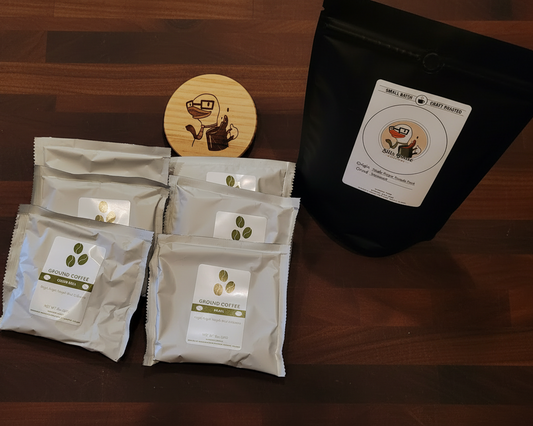
If you’re brewing for a crowd or want to compare several coffees, the Best Sellers 2oz Sample Pack gives you a convenient way to explore different flavor profiles without committing to a full lineup of bags.
Your Goal Is Balance, Not Grinder Glory
You do not need the most expensive grinder, a laboratory coat, or Morton’s complete filing system to brew better coffee. Start with a sensible grind for your method, taste the result, and make small, deliberate changes.
Remember the flock’s central rule:
- Sour, weak, or watery? Go finer.
- Bitter, dry, or muddy? Go coarser.
- Balanced and sweet? Leave it alone.
That last step is important. Once the coffee tastes right, stop adjusting just to feel productive. Even Gerald agrees that perfection is best enjoyed immediately, preferably before someone brings out a new spreadsheet.
For more brewing inspiration, browse the Silly Goose coffee collection, choose a roast that suits your method, and let your grinder do the honking hard work.